Providence's Go-To Roofers for Every Roofing Need
Looking for a roofer in Providence who won't ghost you after taking a deposit? You're in the right place — we've rounded up the local roofing pros so you can skip the guesswork and get your roof fixed without the headache.
Map of Businesses in Providence
All Listings in Providence
6 businesses
Exact Exteriors
Roofing contractor
Five Stars Roofing Company
Roofing contractor
Mighty Dog Roofing of Rhode Island
Roofing contractor
Couto Construction
Roofing contractor
Providence Roofing Company
Roofing contractor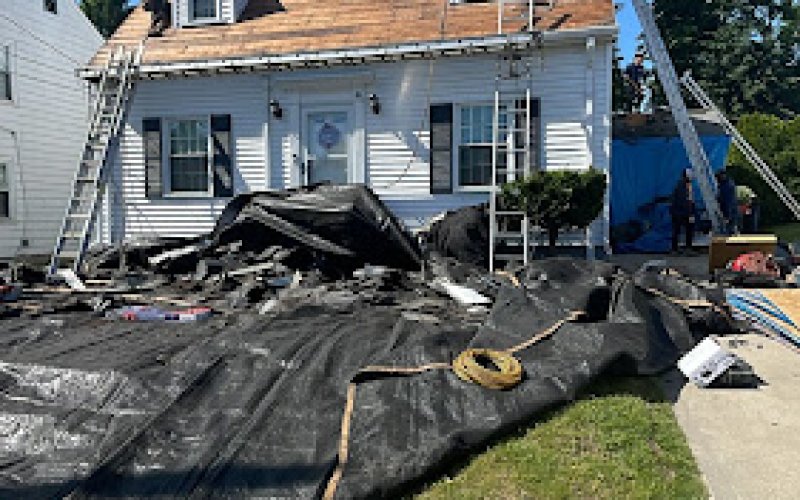
Skyview Exteriors & Remodeling
Roofing contractorAbout roofer in Providence
Here's a pattern that shows up again and again in this city: a triple-decker on Federal Hill gets a new roof in 2015, and by 2027 the neighbor's identical building two doors down is still limping along on shingles from the Clinton administration. Roof age in Providence is wildly inconsistent, and that inconsistency is basically the whole market in a nutshell. Nor'easters, ice dams, humid summers that bake shingles from underneath — the climate here doesn't destroy roofs fast, it destroys them unevenly, which means demand never really dries up.
The city's housing stock skews old. Lots of triple-deckers, a good chunk of Victorian and colonial-era homes in the East Side and Elmwood, plus newer construction filling in around the edges in places like the Jewelry District. That age gap drives a huge amount of the work — you've got roofs from three different decades sitting next to each other on the same block, and they all age at different rates depending on who installed them and how well. Add in insurance-claim cycles after a bad winter, plus a steady trickle of pre-listing repairs from people selling in a competitive market, and you get demand that's fairly constant with predictable spikes.
The market itself feels fragmented rather than dominated by one or two giants. You've got small crews that have worked the same three or four neighborhoods for years, a few mid-sized outfits that run trucks all over the metro area, and the occasional out-of-state company that shows up after a big storm and vanishes by spring. What makes Providence distinct compared to, say, a Sun Belt city is the permitting — the city and surrounding towns take roof permits seriously, especially on older homes in historic districts, so a contractor who doesn't know the local inspection quirks can slow your project down without meaning to.
East Side / College Hill
- Area Profile: Higher income, lots of historic homes, proximity to Brown and RISD means a mix of owner-occupied houses and rentals.
- Roofers Activity: Slate and cedar shake repair/restoration is more common here than almost anywhere else in the city, alongside standard asphalt re-roofs on the rental stock.
- Price Range: $12,000–$35,000+ depending on whether it's a slate restoration or a full tear-off.
- Local Note: Historic district guidelines can restrict material choices — you often can't just swap slate for architectural shingle without a fight.
Federal Hill
- Area Profile: Dense, mixed-income, heavy concentration of triple-deckers and older multi-family buildings.
- Roofers Activity: Flat and low-slope roof work is huge here — rubber membrane (EPDM) repairs and replacements on the back additions and multi-family flat sections.
- Price Range: $3,500–$9,000 for flat roof sections; full building re-roofs run higher depending on unit count.
- Local Note: Landlords tend to prioritize speed and cost over premium materials — quick turnaround matters more than curb appeal.
Elmwood
- Area Profile: Working-class, diverse, a lot of long-term homeowners alongside newer arrivals buying into an appreciating market.
- Roofers Activity: Standard asphalt shingle repairs and full re-roofs dominate; storm-damage insurance work shows up here more than in wealthier areas.
- Price Range: $6,000–$14,000 for most full re-roof jobs.
- Local Note: Older roofing over older roofing (double or triple layers) isn't unusual, which affects both cost and code compliance once it's time to tear off.
Mount Hope
- Area Profile: A mix of long-time families and newer homeowners, modest incomes, steady but not flashy.
- Roofers Activity: Repair-first mentality — patch jobs and partial replacements are more common than full tear-offs, since budgets are tighter.
- Price Range: $400–$2,500 for typical repairs; $7,000–$11,000 for full replacements when it finally happens.
- Local Note: Ice dam damage along the eaves is a recurring issue thanks to older, less-insulated attic spaces.
📊 Current Price Points:
- Budget options: $350–$1,800 (minor repairs, flashing fixes, patch jobs)
- Mid-range: $6,500–$14,000 (full asphalt shingle re-roof, most popular segment)
- Premium: $18,000+ (metal, slate, or tile roofing systems)
📈 Market Trends:
- Demand tends to spike right after severe winter storms or a bad hail event — expect a surge in calls and a corresponding stretch in scheduling.
- Material availability has been inconsistent in recent years; certain shingle colors or metal panel profiles can run into backorder delays depending on supplier.
- Pricing has generally trended upward, tracking labor costs and material costs rather than staying flat.
- Late spring through early fall is peak install season — dry weather, longer days, crews at full capacity.
- A typical full re-roof, once scheduled, usually takes 1–4 days for a standard house; larger multi-family buildings can stretch to a week or more.
💰 What People Are Spending:
- Minor repairs (flashing, leak patch): $300–$2,000
- Full asphalt shingle re-roof: $6,500–$15,000
- Flat/low-slope roof replacement: $4,000–$12,000
- Metal or slate roofing: $18,000–$45,000
- Gutter replacement/repair (often bundled): $1,200–$4,500
Economic Indicators: Providence's population has held fairly steady with modest growth in recent years, and housing values in neighborhoods like Elmwood and the West End have been climbing, which pushes more homeowners toward pre-sale roof repairs. The city's economy leans on healthcare, education (Brown, RISD, Johnson & Wales), and a slowly rebuilding manufacturing/service base. Development activity is concentrated around downtown and the Jewelry District, with residential rehab work scattered across the older neighborhoods.
Local Market Dynamics: Roofers demand here is driven less by new construction and more by aging inventory and weather cycles. Insurance claim work ebbs and flows with storm severity each winter. Competition is fragmented — plenty of small, neighborhood-based crews plus a handful of larger regional companies — rather than one or two firms controlling the market. Material costs have been a moving target, and that unpredictability trickles down into quote variability between contractors.
How This Affects Buyers/Customers: If you're getting quotes right after a major storm, expect higher prices and longer wait times — every contractor in the metro is booked. If you can plan ahead and book in the shoulder seasons, you'll generally get more attention, more competitive pricing, and more schedule flexibility.
Providence Seasonal Patterns:
- ☀️ Spring/Summer: Peak install season — dry conditions, longest lead times, and often the highest prices because everyone wants work done before winter.
- 🍂 Fall: Strong demand as homeowners rush to beat the first freeze; a good window if you book early in the season.
- ❄️ Winter: Slower for full installs (weather-dependent), but emergency repair calls spike after ice storms — pricing on repairs can climb during this stretch.
- 📅 Peak months: Late spring through midsummer is when you need to book fast; late winter/early spring is often better for negotiating.
Timing Tips for Providence: The best deals tend to show up in the off-season lull — late winter before storm season really kicks in. Crew availability tightens dramatically right after any major nor'easter, so if your roof is already borderline, don't wait for the storm to force your hand. Permitting can add a week or two depending on the town and season, so factor that into your timeline.
Smart Timing Tips:
- ✓ Get on a contractor's schedule in late winter, before the spring rush hits
- ✓ Don't wait until after a storm to fix a roof you already know is failing
- ✓ Ask about permitting timelines upfront, especially in historic districts
- ✓ Budget extra time in fall if you want the job done before the first freeze
Credentials to Verify: In Rhode Island, roofing contractors should carry a state contractor's registration through the RI Contractors' Registration and Licensing Board. Manufacturer certifications — GAF Master Elite, Owens Corning Preferred Contractor — signal a company that's invested in training and stands behind its warranty work. Membership in trade groups or a long-standing local BBB profile is another decent signal.
Questions to Ask:
- How long have you been working in Providence specifically, not just "the region"?
- Can you provide references from jobs done in my neighborhood?
- What's covered under workmanship warranty versus manufacturer warranty, and for how long?
⚠️ Red Flags Specific to Providence Roofers:
- Storm-chaser door-knockers offering "storm damage specials" right after severe weather — a well-known seasonal scam pattern in this industry.
- Demanding full payment upfront before any work starts.
- No permanent local address or only a P.O. box.
- Pressuring you to sign an insurance-claim assignment before an adjuster has even inspected the roof.
Where to Check Complaints: The RI Contractors' Registration and Licensing Board is the place to verify registration status and check for complaints. BBB profiles are useful for a longer paper trail. On Google and Yelp, look less at the star average and more at how a company responds to negative reviews — that tells you more about accountability than the rating itself.
✓ Established presence in Providence (not just passing through)
✓ Verifiable local reviews and references
✓ Transparent pricing, no hidden fees
✓ Clear process explained upfront
✓ Responsive communication
No RI contractor registration or refusal to provide it
Vague or verbal-only estimates with nothing in writing
Pushy sales tactics right after a storm
No local references or a portfolio that's entirely out-of-state
Check Reviews & Ratings
We recommend verifying businesses through trusted review platforms before making a decision.
Frequently Asked Questions
Popular Categories in Providence
Explore Other Cities
Professional Categories in Providence, RI
Related Services from Similar Professionals